
Choosing and Preparing Texts for Striving Readers

Two steps help you select and prepare texts for use with striving readers!
Poetry Love!

Reading and writing poetry is essential for our struggling readers. It may be a “forgotten genre” in the academic standards, but its use in literacy has incredible benefits for our striving students. In reading, fluency and comprehension are the benefactors of its use, and in writing, organization and communication benefit. Here are some ways to […]
Celebrate Literacy All Year

with this literary calendar for middle school and high school! Do you think of a focus word each new year? This year, our word is preparation. We don’t mean the preparation of lesson plans – we mean the preparation for fun! How many times have we been halfway through the day only to read a […]
Four Steps to Scaffold Written Response
Help your striving readers craft written responses to text Written responses seem to be the trend, including within state assessments. But how do we move our striving readers and writers to a point that they can express their thoughts, support them with text, and discuss them with others? After all, the purposes of written response […]
Reading and Listening Comprehension

The link that matters! When we think of striving readers, we must expand our support to listening and reading comprehension. Hit the Repeat button! If you think your students aren’t listening to you, you’re probably right! Did you know that the human auditory brain structure is not fully mature until about 15 years old? That means […]
Moving from Concrete to Abstract Understanding in Reading

Help students move from concrete to abstract thinking in literacy with everyday objects! Through tangible items and analogies, concepts become more clear for students!
Accelerate Reading Skills to Avoid the Avalanche
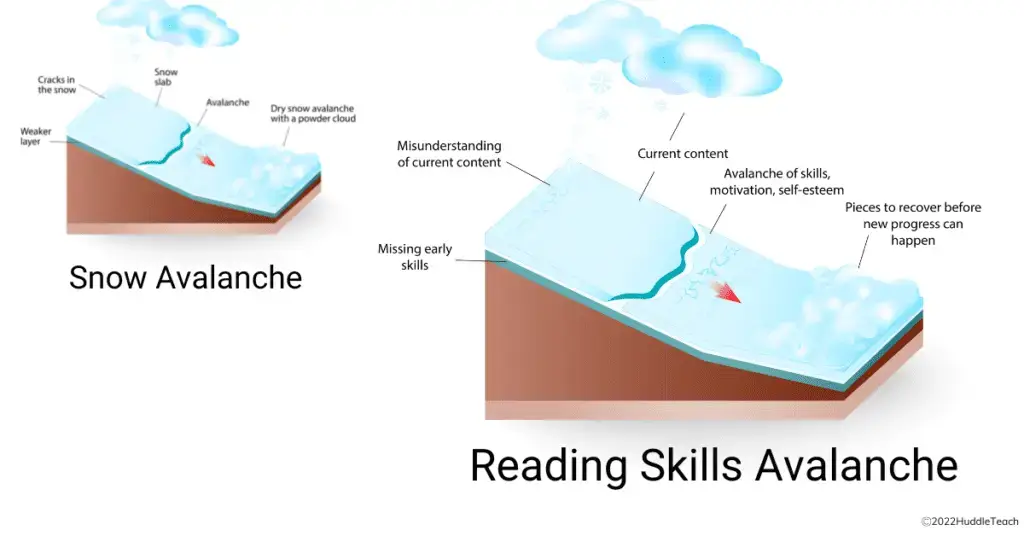
Protect students from the middle school crash Perhaps it is the triple degree heat (or the Stanley Cup finals!) that makes me think of snow – and avalanches – rather than any summery metaphor. No matter – here we are, talking about how the lack of foundational skills often leads to the avalanche that is […]
Nonfiction Text Structures

Understanding the relationship of ideas in text Beginning Early Older students have been learning the underlying concepts necessary to understand nonfiction text structures for years. Take the hula-hoop sorting activities in kindergarten, preparing students to discuss compare / contrast relationships in later grades. Sequencing a story in primary grades with felt board characters prepare students […]
Plot Diagrams and Lines
Why the hats, mountains, and roller coasters don’t tell the whole story Earliest Stories Our youngest children, from birth to kindergarten, often experience stories told as a sequence of related events. Think of titles like Brown Bear, Brown Bear and Goodnight Moon. These books are important for learning language, pattern, repetition, and sequence. If you […]
5 Must-Read Fluency Research Articles

Support for Fluency Interventions in Secondary Reading Updated 2025 Secondary teachers often assume older students have mastered early reading skills, including decoding and fluency. As a matter of fact, many secondary ELA teachers have trouble defining the role fluency plays in reading comprehension because it wasn’t included in any pre-service work. (Be sure to check […]
